
The Power of Relationships for Creating Positive Change
Relational coordination is a powerful method for working better together to create value for leaders, co-workers and customers. It is a complement to lean and other improvement methods, and a well-validated method in healthcare and other sectors.
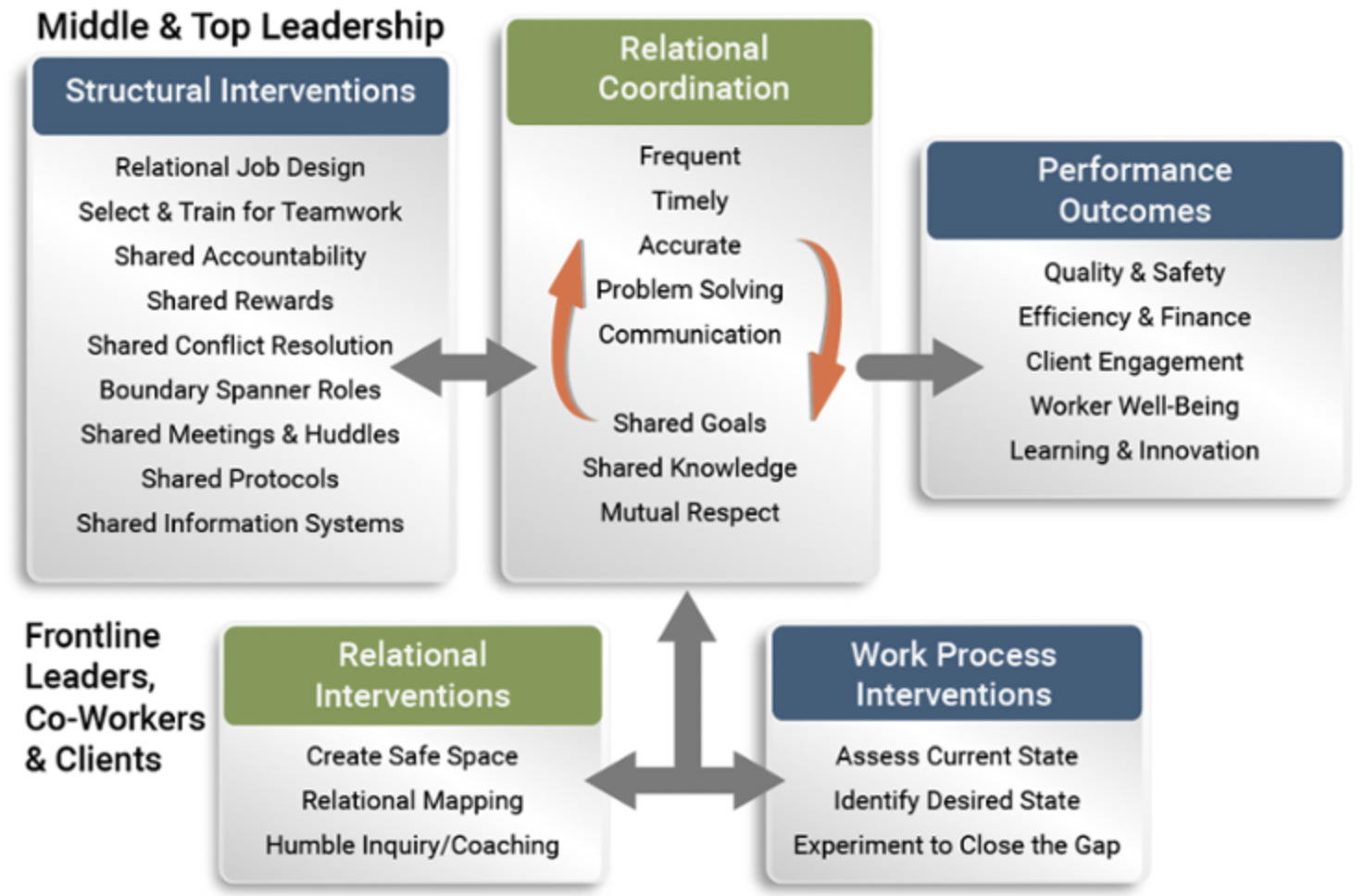
How can we deliberately intervene to change both organizational structures and relational dynamics in order to produce sustainable, cost-effective, high-quality outcomes? To address these questions, Professor Jody Hoffer Gittell worked with Amy Edmondson, Edgar Schein, Tony Suchman and other colleagues from many fields of research and practice to develop the Relational Model of Organizational Change.
The Relational Coordination Toolbox below offers frameworks, interventions and assessment tools to help organizations build relationships of shared goals, shared knowledge and mutual respect - supported by psychological safety - across differences.
The Relational Model of Organizational Change
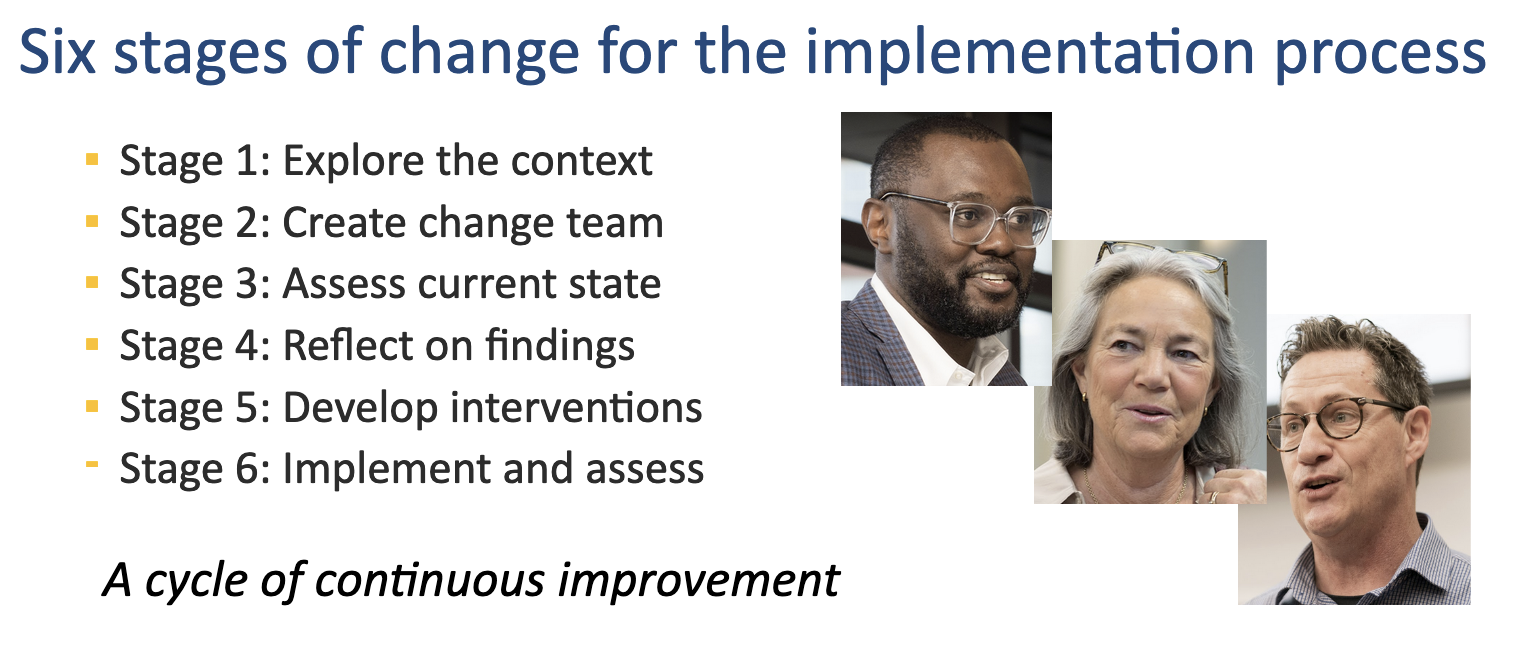 The Power of Difference
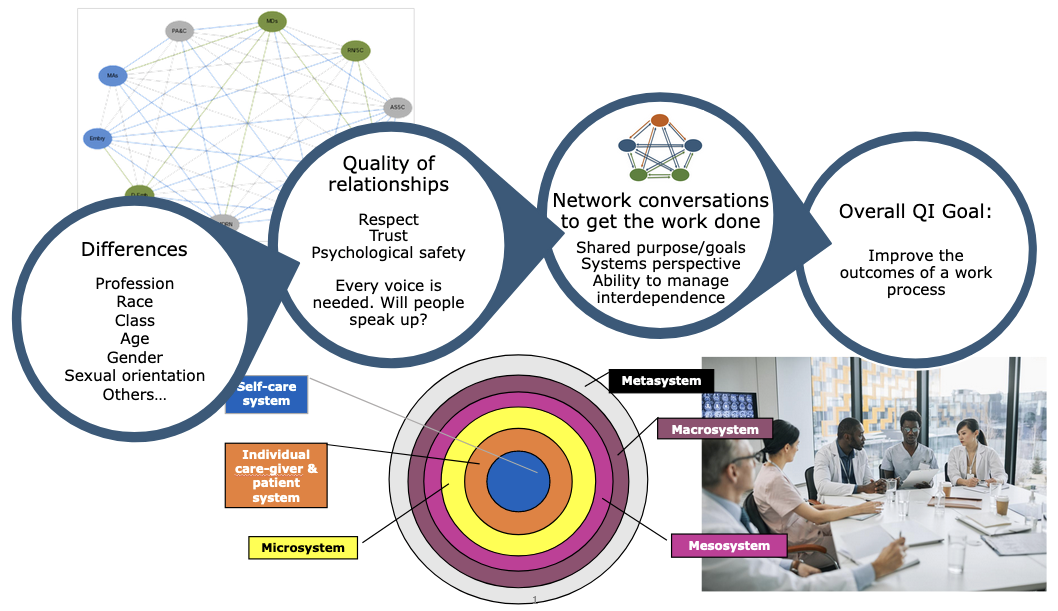
Differences associated with professional and social identities bring a broad array of perspectives, life experiences, values, know-how, approaches to problem solving and more. These differences are an enormous resource for innovation and adaptation. The unique view of any one person may stimulate a whole new solution. If not managed well, however, these same differences become sources of conflict, tension and power struggles about whose views are ‘right’ and whose perspectives will prevail.
Which way things go depends upon the group members’ communication skills; do they make it safe enough for people to share their unique views and are they able to listen with enough open-mindedness to consider new ideas?
The Relational Coordination Toolbox below includes frameworks, assessment tools and intervention tools developed by Wale Olaleye, Tony Suchman and Jody Hoffer Gittell to help organizations leverage the power of difference.
Learn about RAD project leaders, sites and curriculum here.
The Relating Across Difference Model of Change
Relational Coordination Toolbox
RC Master Class Training and Credentialing
Intervention Tools relational interventions work process interventions structural interventions
MEASUREMENT TOOLS |
Relational Mappingarticle - Seeeing the whole together through relational mapping (lauren hajjar et al) |
Relational Coordination SurveyRC survey - online platform for measurement, analytics and data visualization |
Organizational Structures Assessment Tool (OSAT)What is it?presentationOrg structures assessment tool - online platform for measurement, analytics and data visualization |
The Relational Model of Organizational Change