
February 13, 10:30 am - 12:00 pm ET
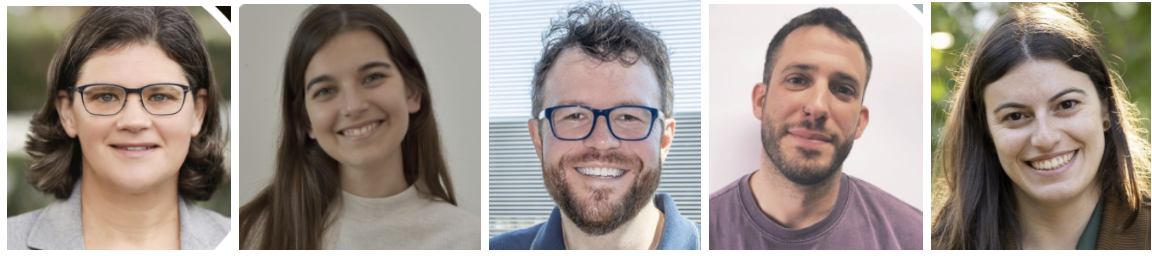
 Facilitator
Jody Hoffer Gittell, Heller School for Social Policy & Management, Brandeis University
Panelists
Anne Douglass, UMass Boston
Mora del Fresno, Instituto Relacional
Pau Quintana, Instituto Relacional (invited)
Sofia Pereira, The Relational Lab
Jane Feinberg, Power of Place
Andre Morgan, Beverly Public Schools
Matt Jones, Devon County Schools
Jeff Grim, George Mason University
Brenda Zierler, University of Washington School of Nursing
Tony Suchman, Relationship Centered Health Care
What is relational education? Relational education theory proposes that learning occurs through relationships (Giroux & Penna, 1979; Aspelin, et al, 2020; Gravett, et al, 2024; Plantin Ewe & Fjelkner Pihl, 2024). Relational education is about the competencies that students learn - not just technical but also relational competencies such as the ability to communicate and relate across differences, the ability to engage in systems thinking, and the ability to create integrative solutions to complex problems.
Relational education is also about the way learning happens in a relationally coordinated learning community. According to Instituto Relacional: “We understand that there is no deep learning without meaningful relationships, and that transforming education implies rethinking how we interact in the classroom, among teams, with families and with the environment.” To transform education in the midst of profound industry disruption is likely to require strong relational networks among key stakeholders - leaders, faculty, staff, students, parents, alumni, employers, and policy makers - with each stakeholder bringing their knowledge and goals to the table in a timely way.
How does relational education work at different stages of learning? How relevant is it in a world dominated by technology, artificial intelligence and political polarization? What might students learn about relationships through design thinking or sports or student clubs or by observing their teachers, professors and educational leaders? From a research perspective, how might we study the impact of relational education on outcomes of interest to multiple stakeholders?
We've invited thought leaders from across the educational continuum to share their work and answer these questions. Our colleagues from Spain, Portugal, UK and Massachusetts have been working to strengthen relational education by building relationships between schools and families, among teachers, among students, and between teachers and students. Other colleagues from New York, Virginia and Washington have been working with multiple stakeholders to embed relational principles into undergraduate and professional education.
Visit Relational Education Innovation Lab here
Register Here
You will receive a zoom link and calendar invite after registering. You must be a member or be invited by a member. Contact us at relationalcoord@brandeis.edu to be invited as our guest.
Become a member or renew your membership here!
References
Arnold Ventures (2025). Balancing the costs and value of graduate programs .
Aspelin, J. (2020). Teaching as a way of bonding: A contribution to the relational theory of teaching. Educational Philosophy and Theory, 53(6), 588-596.
Bolton, R., Logan, C., & Gittell, J. H. (2021). Revisiting relational coordination: A systematic review. The Journal of Applied Behavioral Science, 57(3), 290-322.
Cox, M., Cuff, P., Brandt, B., Reeves, S., & Zierler, B. (2016). Measuring the impact of interprofessional education on collaborative practice and patient outcomes. Journal of interprofessional Care, 30(1), 1-3.
Cutcher-Gershenfeld, J. (2025). The consortia century: Aligning for impact. Oxford University Press.
Douglass, A. L. (2019). Leadership for quality early childhood education and care. OECD Education Working Papers, (211), 0_1-31.
Felten, P., & Lambert, L. M. (2020). Relationship-rich education: How human connections drive success in college. JHU Press.
Fuller, J., Langer, C., & Sigelman, M. (2022). Skills-based hiring is on the rise. Harvard Business Review, 11, 1-6.
Giroux, H. A., & Penna, A. N. (1979). Social education in the classroom: The dynamics of the hidden curriculum. Theory & Research in Social Education, 7(1), 21-42.
Gittell, J. H., & Douglass, A. (2012). Relational bureaucracy: Structuring reciprocal relationships into roles. Academy of Management Review, 37(4), 709-733.
Gravett, K., Taylor, C. A., & Fairchild, N. (2024). Pedagogies of mattering: Re-conceptualising relational pedagogies in higher education. Teaching in Higher Education, 29(2), 388–403.
Grim, J. K., Bausch, E., Hussain, A., & Lonn, S. (2024). Is it what you know or who you know?: An information typology of how first-generation college students access campus resources. Journal of College Student Retention: Research, Theory & Practice, 26(1), 194-215.
Jongbloed, B., Enders, J., & Salerno, C. (2008). Higher education and its communities: Interconnections, interdependencies and a research agenda. Higher Education, 56(3), 303-324.
Korn, J. (2026). How a top liberal arts school is revamping its curriculum for career readiness. Forbes, February 3.
Levine, A., & Van Pelt, S. (2025). From upheaval to action: What works in changing higher education. JHU Press.
Levine, A., & Van Pelt, S. (2021). The great upheaval: Higher education's past, present, and uncertain future. JHU Press.
Margalina, V. M., De-Pablos-Heredero, C., & Montes-Botella, J. L. (2017). Achieving quality in e-learning through relational coordination. Studies in Higher Education, 42(9), 1655-1670.
Plantin Ewe, L., & Fjelkner Pihl, A. (2024). Relational competence in higher education: A systematic review. Cogent Education, 11(1).
Portelli, J. P. (1993). Exposing the hidden curriculum. Journal of Curriculum Studies, 25(4), 343-358.
Rosenberg, B. (2023). “Whatever it is, I’m against it”: Resistance to change in higher education. Cambridge, MA: Harvard Education Press.
Sanchez, M. D. C. G., De-Pablos-Heredero, C., Medina-Merodio, J. A., Robina-Ramírez, R., & Fernandez-Sanz, L. (2021). Relationships among relational coordination dimensions: Impact on the quality of education online with a structural equations model. Technological Forecasting and Social Change, 166, 120608.
Skakon, J. (2014). Relational and course coordination at the university: Can the principles of relational coordination incorporated into the course coordinator role strengthen constructive alignment? Human Factors in Organizational Design and Management—XI, 625-630.