Relational Coordination Collaborative

Relational Education Innovation Lab

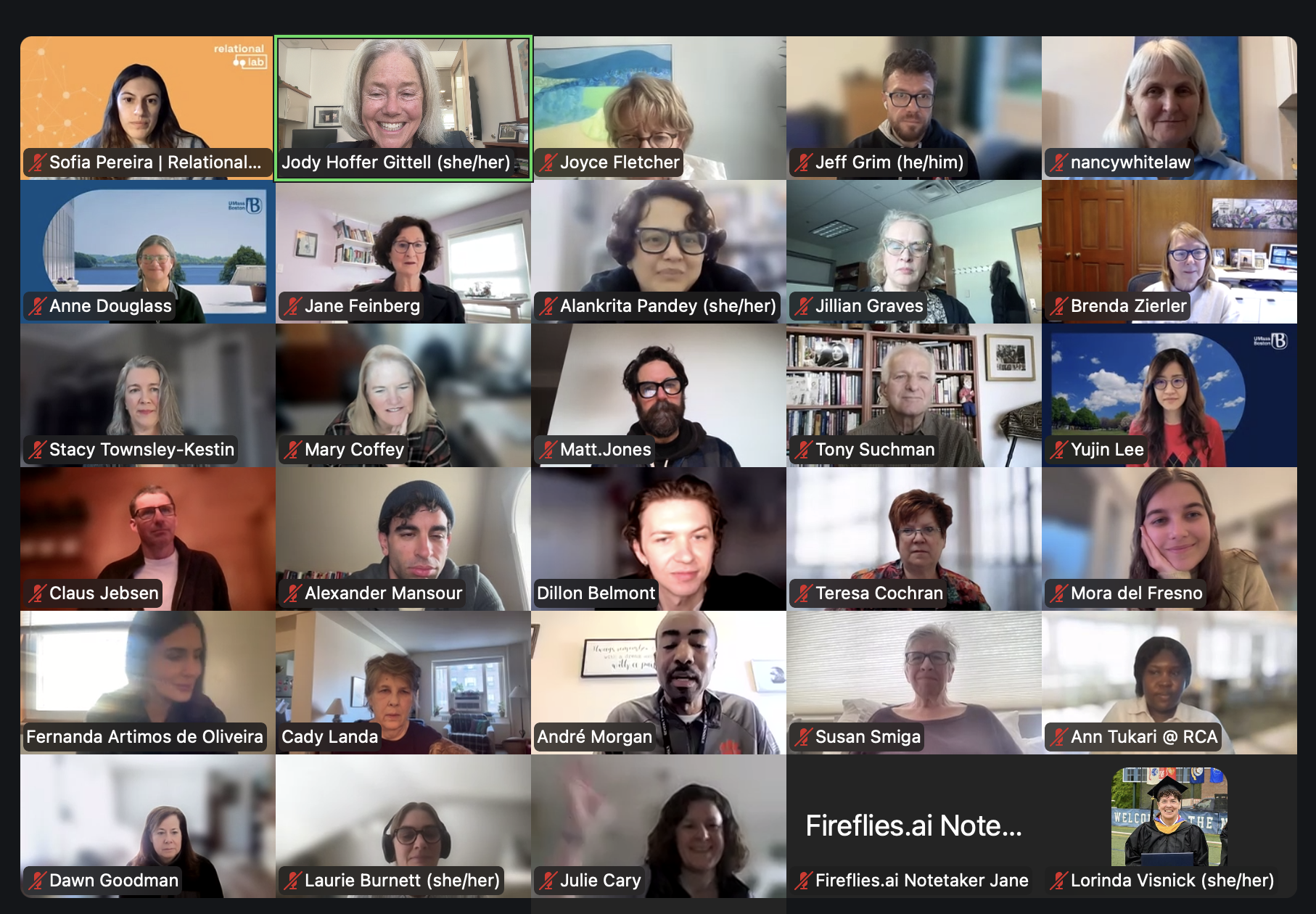
RC Cafe Participants

What is relational education? Relational education theory proposes that learning occurs through relationships (Giroux & Penna, 1979; Aspelin, et al, 2020; Gravett, et al, 2024; Plantin Ewe & Fjelkner Pihl, 2024).  Relational education is about the competencies that students learn - not just technical but also relational competencies such as the ability to communicate and relate across differences, the ability to engage in systems thinking, and the ability to create integrative solutions to complex problems.   

Relational education is also about the way learning happens in a relationally coordinated learning community.  According to Instituto Relacional: “We understand that there is no deep learning without meaningful relationships, and that transforming education implies rethinking how we interact in the classroom, among teams, with families and with the environment.”  To transform education in the midst of profound industry disruption is likely to require strong relational networks among key stakeholders - leaders, faculty, staff, students, parents, alumni, employers, and policy makers - with each stakeholder bringing their knowledge and goals to the table in a timely way. 

Research shows that employers are eager to hire for soft (sometimes called durable) skills.  But "there are gaps, particualrly in soft skills, between student preparation and the skills employers are seeking in new hires.  Verbal communication is an example.  While 81 percent of employers rate this skill as being "very important," only 49 percent feel that graduates are "very prepared"  to demonstrate it in the workplace.  Similar gaps exist for adaptability and flexibility (81 percent versus 51 percent), critical thinking (79 percent versus 49 percent), and complex problem solving (79 percent versus 50 percent).  Employers also want more from new hires in creativity, data literacy, and inter-cultural communication" (Levine & Van Pelt, 2026).

How does relational education work at different stages of learning?  How relevant is it in a world dominated by technology, artificial intelligence and political polarization?  What might students learn about relationships through design thinking or sports or student clubs or by observing their teachers, professors and educational leaders?  From a research perspective, how might we study the impact of relational education on outcomes of interest to multiple stakeholders?

We've invited thought leaders from across the educational continuum to join this Innovation Lab.  Colleagues from Spain, Portugal, Chile, UK and Massachusetts have been working to strengthen relational education by building relationships between schools and families, among teachers, among students, and between teachers and students.  Other colleagues from New York, Virginia, Michigan and Washington State have been working with multiple stakeholders to embed relational principles into undergraduate and professional education.  

Purpose of this Innovation Lab

The purpose of the Relational Education Innovation Lab is to create a community of scholars, practitioners, and scholar-practitioners to use the principles and practices of relational coordination to advance positive outcomes for administrators, faculty, staff, and students. This Innovation Lab will connect members from various institutional types, roles, and interests to create synergy for community-building, practice-sharing, and research opportunities.   To learn more, please contact one of the Lab Leaders below. 
View RC Cafe on Relational Education

manage your member account to join this innovation lab 

Resources

Aspelin, J. (2020). Teaching as a way of bonding: A contribution to the relational theory of teaching. Educational Philosophy and Theory, 53(6), 588-596.

Bolton, R., Logan, C., & Gittell, J. H. (2021). Revisiting relational coordination: A systematic review. The Journal of Applied Behavioral Science, 57(3), 290-322.

Cox, M., Cuff, P., Brandt, B., Reeves, S., & Zierler, B. (2016). Measuring the impact of interprofessional education on collaborative practice and patient outcomesJournal of interprofessional Care30(1), 1-3.

Cutcher-Gershenfeld, J. (2025). The consortia century: Aligning for impact. Oxford University Press.

Douglass, A. L. (2019). Leadership for quality early childhood education and care. OECD Education Working Papers, (211), 0_1-31.

Felten, P., & Lambert, L. M. (2020). Relationship-rich education: How human connections drive success in college. JHU Press.

Fuller, J., Langer, C., & Sigelman, M. (2022). Skills-based hiring is on the rise. Harvard Business Review, 11, 1-6.

Giroux, H. A., & Penna, A. N. (1979). Social education in the classroom: The dynamics of the hidden curriculum. Theory & Research in Social Education, 7(1), 21-42.

Gittell, J. H., & Douglass, A. (2012). Relational bureaucracy: Structuring reciprocal relationships into roles. Academy of Management Review, 37(4), 709-733.

Gravett, K., Taylor, C. A., & Fairchild, N. (2024). Pedagogies of mattering: Re-conceptualising relational pedagogies in higher education. Teaching in Higher Education, 29(2), 388–403. 

Grim, J. K., Bausch, E., Hussain, A., & Lonn, S. (2024). Is it what you know or who you know?: An information typology of how first-generation college students access campus resources. Journal of College Student Retention: Research, Theory & Practice26(1), 194-215.

Jongbloed, B., Enders, J., & Salerno, C. (2008). Higher education and its communities: Interconnections, interdependencies and a research agenda. Higher Education, 56(3), 303-324.

Korn, J. (2026).  How a top liberal arts school is revamping its curriculum for career readiness Forbes, February 3.

Levine, A., & Van Pelt, S. (2025).  From upheaval to action: What works in changing higher education.  JHU Press.

Levine, A., & Van Pelt, S. (2021). The great upheaval: Higher education's past, present, and uncertain future. JHU Press.

Margalina, V. M., De-Pablos-Heredero, C., & Montes-Botella, J. L. (2017). Achieving quality in e-learning through relational coordination. Studies in Higher Education, 42(9), 1655-1670.

Plantin Ewe, L., & Fjelkner Pihl, A. (2024). Relational competence in higher education: A systematic review. Cogent Education, 11(1). 

Portelli, J. P. (1993). Exposing the hidden curriculum. Journal of Curriculum Studies, 25(4), 343-358.

Rosenberg, B. (2023). “Whatever it is, I’m against it”:  Resistance to change in higher education.  Cambridge, MA: Harvard Education Press.

Sanchez, M. D. C. G., De-Pablos-Heredero, C., Medina-Merodio, J. A., Robina-Ramírez, R., & Fernandez-Sanz, L. (2021). Relationships among relational coordination dimensions: Impact on the quality of education online with a structural equations model. Technological Forecasting and Social Change, 166, 120608.

Skakon, J. (2014). Relational and course coordination at the university: Can the principles of relational coordination incorporated into the course coordinator role strengthen constructive alignment?  Human Factors in Organizational Design and Management—XI, 625-630.

Innovation Lab Leaders

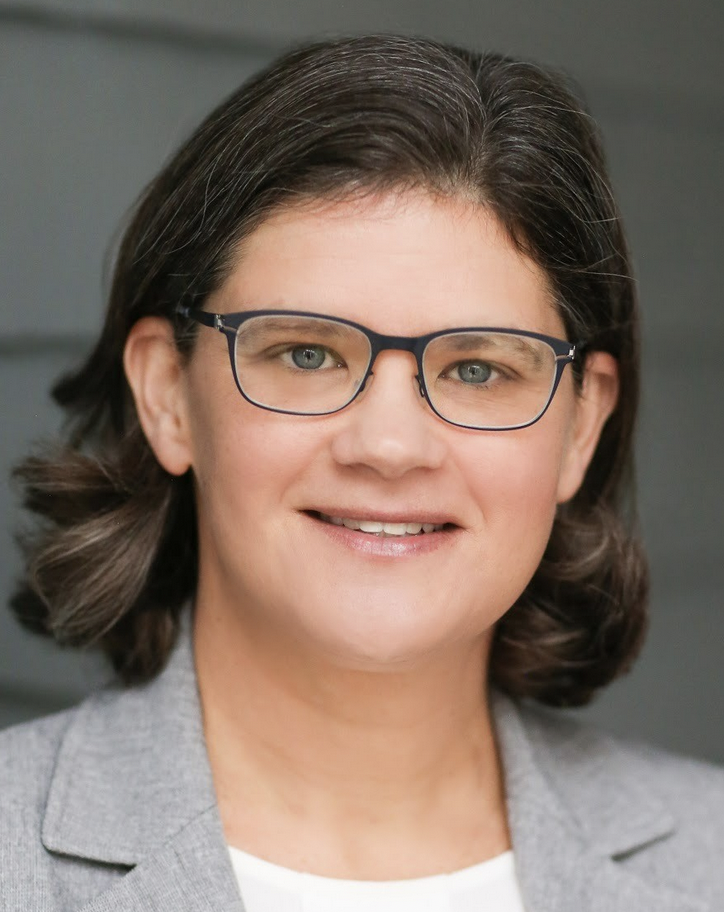
Jody Hoffer Gittell

Professor, The Heller School, Brandeis University; Director, Relational Coordination Collaborative

Jody Hoffer Gittell is Professor and PhD Program Director at Brandeis University's Heller School, and Program Director of the Academy of Management’s Organization Development and Change Division. Gittell teaches Strategic Human Resource Management, Research Methods, and Organizational and Institutional Theory.  She is the Founder and Director of the Relational Coordination Collaborative and Chief Executive Officer of Relational Coordination Analytics. She is interested in relational strategies for achieving organizational performance, organizational change and human well-being.  She has published scientific articles and books such as The Southwest Airlines Way: Using the Power of Relationships to Achieve High Performance, High Performance Healthcare: Using the Power of Relationships to Achieve Quality, Efficiency and Resilience, and Transforming Relationships for High Performance: The Power of Relational Coordination.  She is currently co-editing a book with Amanda Brewster, Ingrid Nembhard and Vicky Parker called Healthcare Management and Human Well-Being in a Turbulent Era. 

Together with students and colleagues around the world, Dr. Gittell has developed relational coordination theory, which predicts that highly interdependent work is most effectively coordinated through relationships of shared goals, shared knowledge, and mutual respect, supported by frequent, timely, accurate, problem-solving communication. The theory shows how relational coordination drives a wide range of desired performance outcomes and how organizations shape it, for better or worse.  Dr. Gittell speaks frequently about the theory and practice of relational coordination. She serves as Vice Chair of the Board for Greater Seacoast Community Health, and on the Executive Committee for NAACP Seacoast. She received her BA from Reed College, her MA from The New School, and her PhD from the Massachusetts Institute of Technology.

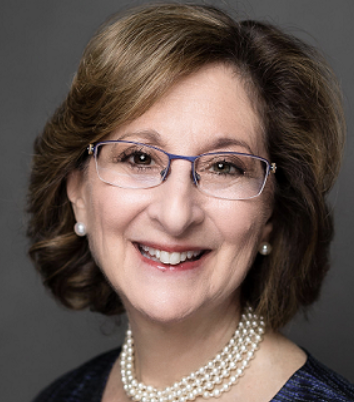
Anne Douglass

Professor, Early Childhood Education, UMass Boston

Anne Douglass, PhD, is professor of early childhood education; director of the graduate certificate program in early education research, policy, and practice; and founding executive director of Early Education Leaders Institute (formerly the Institute for Early Education Leadership and Innovation) at the University of Massachusetts Boston.

Dr. Douglass has been designing and leading innovative academic and leadership development programs for early educators at UMass Boston since 2009. She launched an innovative BA degree program designed for the early care and education workforce and led it for a decade. She grew the BA program from an annual enrollment of 15 students to over 300 students, and the program graduates more racially and linguistically diverse BA-degreed early educators each year than any other higher education institution in Massachusetts. She also led the development of the post master’s certificate and Ph.D. programs in early care and education that are preparing the next generation of leaders and scholars.

Dr. Douglass is a leading national expert on early education leadership, quality improvement, and equity. She designs, implements, and studies practices, policies, and systems that increase the capacity of the racially and linguistically diverse early care and education workforce to lead change, improvement, and innovation. Her research is conducted in partnership with professional, community, government, and philanthropic entities that share a vision to dramatically transform professional development and quality improvement in ECE. As Principal or Co-Principal Investigator, she has been awarded over $30 million in external funds for research and training from foundation and public partners. She is the author of the 2017 book Leading for Change in Early Care and Education: Cultivating Leadership from Within, and she has been published in a wide range of academic journals, books, and news media, and presents nationally and internationally to academic, policy, and professional audiences. All of Dr. Douglass’s academic research, writing, speaking, and teaching is informed by a prior twenty-year career in urban ECE as a teacher, administrator, family child care owner and educator, and quality improvement coach and mentor to programs serving children and families in Boston’s most under-resourced neighborhoods. There, she saw firsthand that quality improvement in ECE cannot be imposed from the outside but must be built, designed, and nurtured by those closest to the work, all in the context of supportive systems and policies. Dr. Douglass is a Pahara-Aspen Institute Leadership Fellow. She earned a PhD in social policy at the Heller School at Brandeis University, a master’s degree at Harvard Graduate School of Education, and a bachelor’s degree in political science from Wellesley College.

Jane Feinberg

Executive Director and Founder, Power of Place Learning Communities

Jane Feinberg, PhD, is the Founder and Executive Director of Power of Place Learning Communities (PoP). For much of her career, she has supported mission-driven organizations in developing their communications, engagement, learning, and leadership capacities as a foundation for driving meaningful and sustained social change.

Most recently Jane was a strategist to school districts in northern New England that received funding from the Nellie Mae Education Foundation to embed student-centered philosophies and practices. She later served as Regional Partnership Lead for Reimagine Learning, a project of New Profit that focused on better supporting marginalized students. This work led to the creation of the Essex County Learning Community (ECLC), which launched in 2018 through funding from the Peter and Elizabeth C. Tower Foundation. ECLC is the flagship program of Power of Place Learning Communities.

Jane began her career as a journalist and documentary producer. She developed, wrote, and produced for award-winning public television programs and series, such as “The American Experience,” “Frontline,” “and other  PBS specials, and later covered social issues as a writer/producer for the nightly newsmagazine “Chronicle.” Feinberg partnered with the United Way and WCVB to direct an award-winning, two-year statewide media campaign that elevated the importance of after-school programs to youth development and thriving communities.

In addition to her media work, Feinberg served as the Director of Communications and Press Secretary for the Boston Public Schools. She also served as Senior Associate for FrameWorks Institute in Washington, D.C., where she helped translate social science research about how Americans think about key social issues into messaging for senior leaders engaged in policy and program change. 

Feinberg is a Summa Cum Laude/Phi Beta Kappa graduate of the University of Minnesota, holds masters degrees from Boston University and Antioch University, and a PhD from Antioch University. Her research focuses on the relational dimensions of teaching and learning, with a particular emphasis on white teachers and students of color. She and her family live in Belmont, Massachusetts. 

Jeffrey Grim

Assistant Professor, George Mason University

Jeff Grim, PhD is an assistant professor at George Mason University. His previous position was as visiting assistant professor at University of Iowa, where he taught courses on higher education administration, teaching and learning, and connecting theory to practice in student affairs. He completed his PhD in Higher Education from the University of Michigan, his masters in student affairs administration from Michigan State University, his bachelors from the University of Maryland, College Park, and his associates in general studies from Hagerstown Community College. Jeff also has a graduate certificate in nonprofit management from Washington University in St. Louis and in executive coaching from Southern Methodist University.

Jeff approaches his research agenda centering the perspectives of participants to critically examine systemic and organizational structures to create inclusive and equitable experiences and outcomes for all faculty, staff, and students in higher education. He utilizes his significant coursework in organizational theory and public policy, along with prior professional experience, to shape a research agenda that meets rigorous scholarly standards and can be applied to improve higher education organizations and practice.

Jeff is particularly interested in how higher education organizational contexts can coordinate (through relationships and structure) to decrease achievement gaps and increase equitable experiences and outcomes for systemically marginalized students.

Cady Landa

Research Assistant Professor, The Children & Family Research Center

Cady Landa, Ph.D, is a Research Assistant Professor at The Children & Family Research Center at the University of Illinois.  Her overarching interest is in developing public policies and programs that support the well-being of families, children, youth, and parents. Her current interests include immigrant families, children and youth with special needs, the transition of youth to adult status, equity and inclusion, and how services can be delivered in ways that promote stakeholder coordination, client participation, and individualization. 

Dr. Landa holds a Ph.D. in Social Policy from Brandeis University Heller School for Social Policy and Management and an M.P.P. from the Harvard Kennedy School of Government. Dr. Landa has a background in public policy- and program-related research, public policy development, teaching, and non-profit management.

Alankrita Pandey

Professor of Management, College of Business, Eastern Michigan University

Alankrita Pandey, PhD, is a Professor of Management at Eastern Michigan University’s College of Business. She currently directs the Master of Science in Human Resources and Organizational Development (MSHROD) China Program.

Dr. Pandey’s research is grounded in Strategic Human Resource Management, with a focus on understanding employee behavior in organizational contexts. Her work explores how HR practices influence individual and group-level outcomes, including in-role and extra-role performance, relational dynamics, and counterproductive work behaviors. She is particularly interested in cross-level effects of organizational policies on employee human capital and workplace relationships.

Her recent research delves into relational coordination, employee well-being, and the experiences of underrepresented groups in the workplace. The COVID-19 pandemic further shaped her scholarly interests, leading to deeper investigations into role relationships and mental health in organizational settings.

Dr. Pandey has published in academic journals such as the Strategic Management JournalJournal of ManagementJournal of Managerial Issues, and Journal of Business and Behavioral Sciences. She is also the co-editor of the Cambridge University Press volume Downsizing: Is Less Still More?, which examines the strategic and human implications of organizational downsizing.

She enjoys working with diverse statistical methods and collaborates extensively with colleagues across institutions. Dr. Pandey is also committed to mentoring graduate and undergraduate research, fostering inquiry-driven learning in her courses.

Over the past few years, she has been involved in a service project with a colleague in the College of Business focused on strengthening the professional development of our students. EMU serves many first‑generation, minority, working, and non-traditional students who bring tremendous potential and resilience—but who often lack the guidance, professional networks, and institutional resources that help them fully leverage their education. 

According to Dr. Pandey: "What began simply as university service has become a deeply meaningful part of my work here at EMU—especially when combined with opportunities to mentor students in a summer internship workshop. The more engaged I become, the more I find myself thinking critically about the relationships that exist across the institution: between students and faculty, students and support units like the Success Center, and between academic programs and the broader ecosystem of services available to them."

"Within my school, we are beginning to develop this professional badge into a more comprehensive, career-focused initiative. As part of that process, I’ve been increasingly interested in how to measure impact more systematically—identifying meaningful metrics, developing outcome measures, and studying the relational patterns that influence student progress. Jeff Grim’s work was eye‑opening in this regard, especially given how many first‑generation students we serve and how much nuance is involved in understanding their pathways."

Caroline Shanti

Associate Dean and Associate Professor, School of Social Work, University of Southern Maine

Caroline Shanti, Ph.D., LCSW, is an Associate Dean and Associate Professor in the School of Social Work at the University of Southern Maine, and a Licensed Clinical Social Worker. Prior to entering academia, they worked with young children and their families specializing in early childhood mental health, while also working in Early Childhood Policy and Program Development. They completed their Ph.D. in Social Policy at the Heller School for Social Policy and Management at Brandeis University in 2014. Since that time, Dr. Shanti’s scholarship has focused on social-emotional development across the lifespan. One aspect of this work centers on the impact of organizational policies and organizational culture on professional development and program outcomes. At USM, they have developed and led the semester-long orientation for new faculty since the Fall of 2017. Over the last two years, they have been a member of the team at USM introducing relational coordination in approaches to advising. Currently, this team is expanding its work to support University leaders in transforming the University culture into one of collaboration.

Innovation Lab Members