
April 10, 11:00 am - 12:00 pm ET
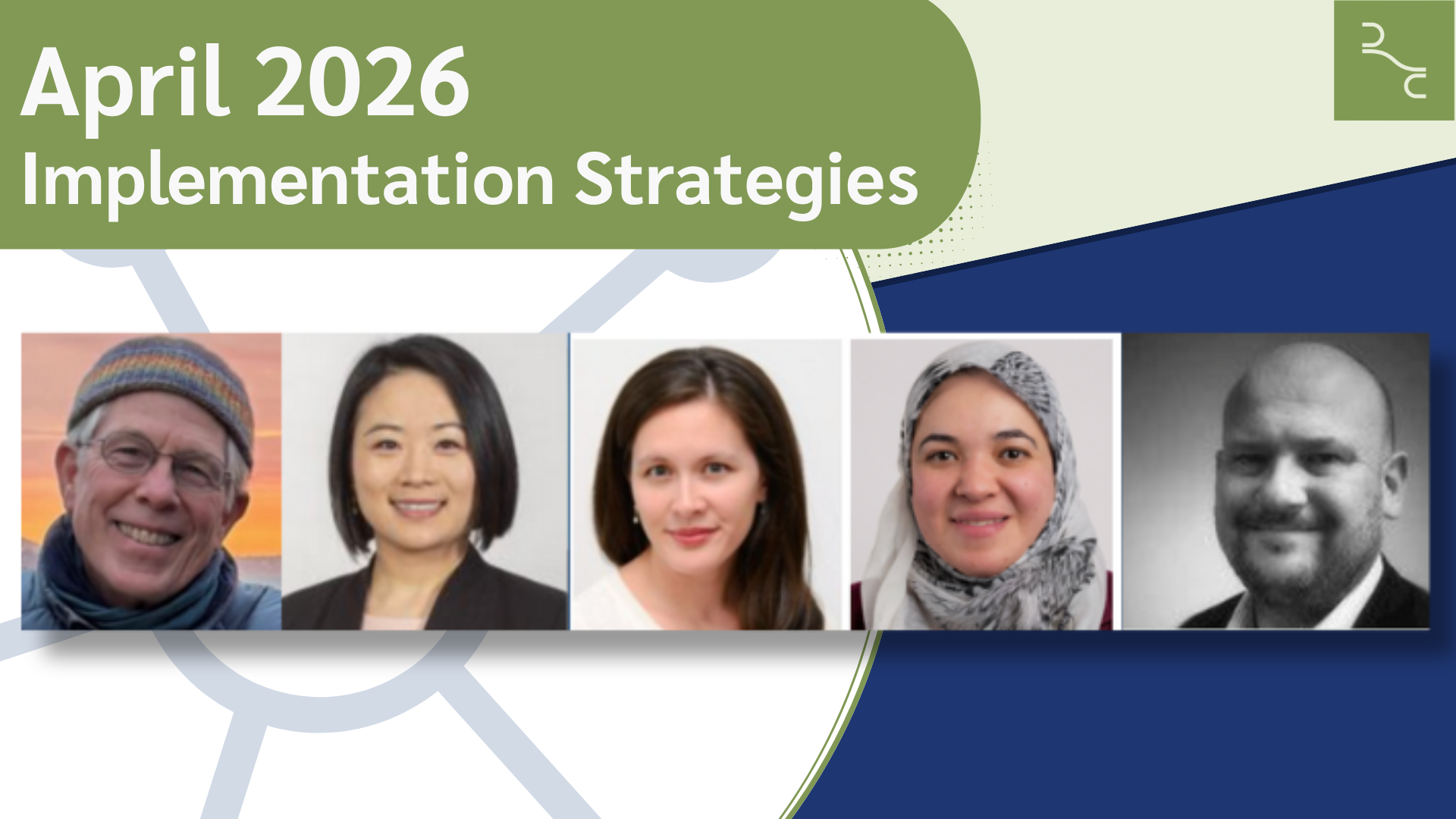 Facilitator
Jim Best, Independent Consultant
Panelists
Sijia Wei, Northwestern University
Heba Ali, Lancaster University
Christina Yuan, Johns Hopkins University
Richard Wylde, NHS Foundation Trust
Overview
RCC members may already be familiar with what Relational Coordination measures - shared goals, shared knowledge, mutual respect, supported by high quality communication - but how is RC built or improved in practice? That's where Relational Interventions come in. This suite of tools can help build relationships of trust, safety, shared goals, and mutual respect to ultimately drive higher performance outcomes.
Complexity science and system thinking teaches us that patterns of interaction at more granular levels (e.g., interpersonal) typically create emergent patterns at a coarser level (e.g., roles, identities, work groups, organizations, etc.). Understanding the fine-grain dynamics and cross-level focus at play will likely give us insight into crafting more effective change strategies. Network science is inherently scale-neutral, describing dynamics of entities and connections at the entity and whole network levels. Although social network science is a different beast because of the agency and adaptability of the entities and quality of the relationships, it can provide measures and provoke our thinking about potential mechanisms connecting the interpersonal and the role levels.
Even as the budding merger of social network analysis and RC theory evolves, we take this opportunity to bring the social network mindset to the problems we face in our practice and our scholarship. In this Cafe, we'll flex towards robust interaction between panelists and attendees, leveraging their experience and expertise to see how these ideas land.
Register Here
You will receive a zoom link and calendar invite after registering. You must be a member or be invited by a member. Contact us at relationalcoord@brandeis.edu to be invited as our guest.
Become a member or renew your membership here!
Background Readings
Altalib, H. H., Lanham, H. J., McMillan, K. K., Habeeb, M., Fenton, B., Cheung, K. H., & Pugh, M. J. (2019). Measuring coordination of epilepsy care: A mixed methods evaluation of social network analysis versus relational coordination. Epilepsy & Behavior, 97, 197-205.
Anderson, A. J., Noyes, K., & Smith, S. D. (2026). Social network analysis and relational coordination: Empowering nurse administrators leading care coordination teams to assess improvement opportunities. The Journal of Nursing Administration, 56(2), 86-91.
Best, J. (2017). Factors and Processes Underlying Increases of Relational Coordination in Task-Coordinating Groups. Dissertation, Saybook University.
Burns, L. R., Nembhard, I. M., & Shortell, S. M. (2022). Integrating network theory into the study of integrated healthcare. Social Science & Medicine, 296, 114664
Gittell, J. H., & Ali, H. N. (2022). Strengthening networks for healthcare integration: A commentary. Social Science & Medicine, 305, 115036.
Gittell, J. H., & Ali, H. N. (2021). Chapter 1, Relational analytics: Guidelines for analysis and action. Routledge.
Khosla, N., Marsteller, J. A., Hsu, Y. J., & Elliott, D. L. (2016). Analysing collaboration among HIV agencies through combining network theory and relational coordination. Social Science & Medicine, 150, 85-94.
Otte-Trojel, T., Rundall, T. G., de Bont, A., & van de Klundert, J. (2017). Can relational coordination help inter-organizational networks overcome challenges to coordination in patient portals? 10(2), 75-83. International Journal of Healthcare Management.