

Each year during July, the disability community celebrates Disability Pride Month. The month is a great time for reflection, joy, and discussion. We also think it is a great time to listen and learn from the community.
Disability is the heart of our work. The Lurie Institute for Disability leads research that helps shape policies, programs, and practices that improve the lives of people with disabilities across the lifespan. We envision a future where people with disabilities can live in the community and easily access all the support they need. Disability Pride Month is an opportunity for all of us to celebrate people with disabilities, past and present, and their brilliance.
This year, the Lurie Institute Communications Team wanted to feature comments from our Advisory Board members on what Disability Pride means to them and a variety of other questions on life with a disability.
How We Celebrated Disability Pride Month 2025
How We Celebrated Disability Pride Month 2023
Advisory Board Member Testimonials
Click on a name to jump to their testimonial below.

Jennifer Senda, Advisory Board Member
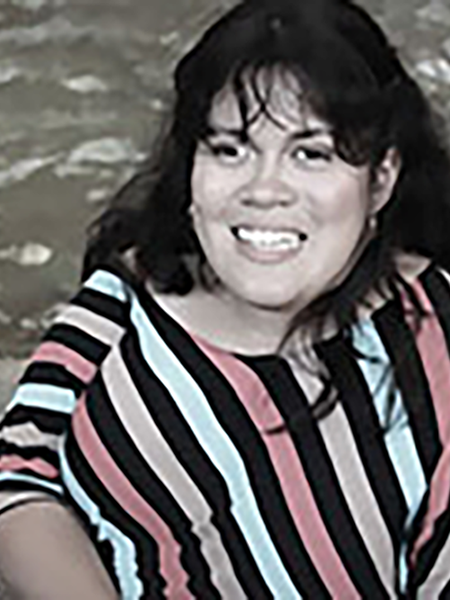 What does disability pride mean to you?
Disability pride, to me, is acceptance, self love, acknowledgment, and community.
What piece of disability history or identity would you like more people to know about?
Everything. I just wish that I had learned more about it sooner. I learned a lot of disability history as an adult, rather than as a child. I wish younger generations we're actively being taught about the history of disability rights, of those who went before us.
How do you celebrate disability pride. How do you encourage others to do the same?
I celebrate disability pride by advocating for disability rights as basic human rights. Remembering that learning from history helps prevent repeating mistakes from our past.
Why is it essential for disabled researchers and contributors to be at the forefront of disability research?
Everyone's experience with disability is different. One person may see something that to another is unclear. Nothing about us without us.
What makes you proud to be a disabled person or disability advocate?
My disability has given me a unique perspective when it comes to life. Each person's life experience is individual. That does not mean that we can't raise our voices in unison to advocate and to speak up for others; it gives us the empathy to do so.
What does being an Advisory Board member mean to you? What experiences in the role made you feel disability pride?
Being a member allows me to see different perspectives and advocate for them. I feel pride in the fact that we are striving to make our voices heard. There's no shame in being disabled. The work that we do allows us to express that in different ways.
What’s something about living with a disability that people often misunderstand or overlook?
Adapting isn't always easy. Pushing through it isn't always good. Disability doesn't always fit in a convenient little box. It comes in many different shades of color.
What’s one experience you’ve had that highlights the ongoing struggle for disability rights and justice?
In my case it's the continuous fight for something as essential as a power chair that fits to those who should already know that medical equipment is essential, regardless of what they see.
In what ways has the fight for inclusion taken an emotional or physical toll on you?
It can get depressing to continuously fight for the rights of yourself and others. Sometimes the Bill of Rights feels more like a bill than rights. It takes time for most to listen. Time can be fleeting.
How do you navigate the frustration of inaccessible systems or environments?
I write letters, emails, make phone calls, talk to my therapist. I read books as a hobby as well if things get too stressful.
Is there anything that you would like to add that was not mentioned in the above questions?
As I was growing up I often heard I was limited in what I could do. One of the things I've learned as an adult with a disability and multiple conditions is that I can do what I want and achieve what I want, I just have to adapt the process to me. I don't have to adapt to the process. I think we need to talk more about the internalized ableism we experience if we're of a certain age and disabled.
Jessie Owen, Advisory Board Member
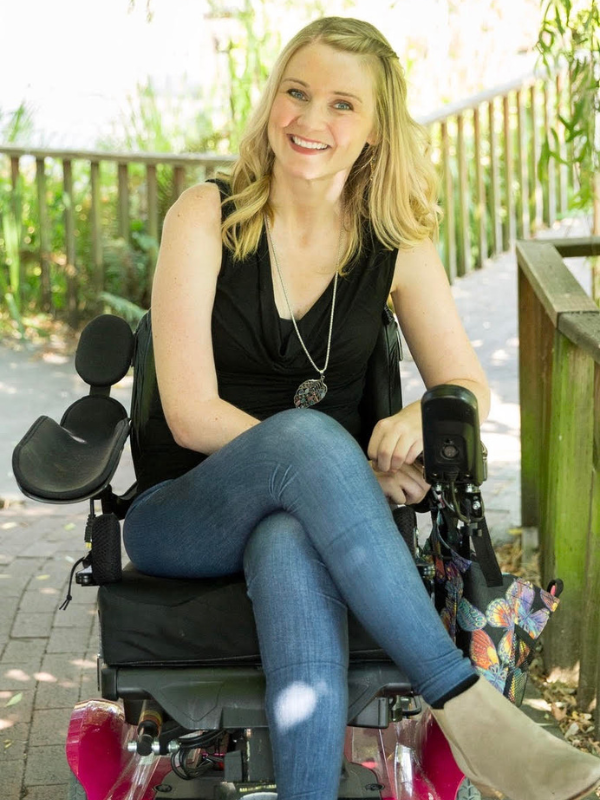 What does disability pride mean to you?
Often during these months, people ask why anyone would need a pride month in the first place.
The LGBTQIA community has had to answer that question endlessly, so I'm certainly not the first person to think about it. But disability pride is its own complicated little beast, if you will.
Because the truth is, I AM proud of myself. I am proud of who I am, the adversity I've overcome, the life I have built, and the tiny, feral, deeply beautiful family I get to call mine, and the metaphorical hair this life has put on my chest. RAWR.
But am I proud of the tree that fell on my car and crushed me into a quadriplegic?
Eh. Not so much.
People often ask if I would change it if I could. And I think maybe they expect me to say no, I wouldn't change it because it made me who I am, gave me strength, gave me perspective, blah blah blah.
But the answer is yes. Hell YES.
Of course I would change it.
I would stop the tree from falling. I would keep my parents. And unsurprisingly, I actually did enjoy having working hands and legs.
I do love my life. I love my husband. I love my kids. I love the life I built in circumstances I would never, ever have chosen.
But do I think I could have had good things without going full ramp enthusiast?
100%.
So why pride?
Because shame is what the world has taught disabled people. It teaches us to hide, apologize, and JUST be grateful for whatever access we get.
Disability pride month matters because disabled people are quite frankly still treated as an afterthought. Have you seen high tops at a restaurant? Stadium seating? Bathroom layouts? Virtually any piece of architecture designed by someone who either didn't think disabled people exist, or thought we only existed in hospitals and cartoons.
It's not exactly a huge leap to understand what it communicates when the only way into a restaurant is through the back, right by the double garbage dumpster.
Jeez Louise, you sure know how to make a girl feel welcome.
Disabled bodies are just treated like problems. And then if you DO get access, that's considered a favor, so be grateful for whatever you get. We're an inspiration when it's useful and ignored when it's inconvenient.
So I think disability pride month is not about glamorizing or glorifying, or trying to communicate that disabled lives are better. It's also not about me waking up every day SOOO thrilled to hear someone call me Meals on Wheels again. It's certainly not me high-fiving the next person who calls me Hot Wheels.
Actually, new rule: if you call me Hot Wheels, or tell me I'm gonna get a speeding ticket, during disability pride month you owe me $50. I will accept the Venmo.
I think disability pride is just having the opportunity to tell the truth about how hard this life can be, while also refusing the narrative that hard means less. I can be frustrated with my body and still have immense respect for it carrying me through impossible things.
I can absolutely hate the barriers and still be proud of the way disabled people keep adapting and taking up space in a world that congratulates us for getting our own cottage cheese out of the dairy aisle. Gee thanks, Geri, I am indeed feeling very "inspirational” today.
I am not proud that I became disabled.
I am proud that I am still here.
I am proud that I built a life inside circumstances I never would have chosen.
I am proud of the disabled community for telling the truth in a world obsessed with climbing ladders and taking the next step, then acting completely shocked when we point out that wheelchairs and stairs have a pretty complicated relationship.
And I am proud every time one of us is visible enough to make someone else feel a little less alone.