

Lurie Institute for Disability Policy
The Lurie Institute for Disability Policy is part of the Heller School for Social Policy and Management at Brandeis University. The Heller School includes a leading community of scholars committed to progressive social policy and development, specifically designed to advance careers committed to social change.

Association of University Centers on Disabilities (AUCD)
AUCD is a membership organization that supports and promotes a national network of university-based interdisciplinary programs. Network members consist of 67 UCEDD organizations, 52 LEND programs, and 14 IDDRC's. AUCD provides support through leadership, advocacy, and networking. Their mission is to improve the health, education, social, and economic well-being of all people with developmental and other disabilities, their families, and their communities by supporting their members in research, education, health, and service activities.

Autistic Self Advocacy Network (ASAN)
ASAN is a nonprofit organization run by and for autistic people. ASAN was created as a national grassroots disability rights organization for the autistic community. Their activities include public policy advocacy, the development of autistic cultural activities, and leadership trainings for autistic self-advocates, all working towards the goal to ensure that the voices of autistic people are heard in policy debates and the halls of power.

Disability Rights Education and Defense Fund (DREDF)
Founded in 1979, DREDF is a leading national civil rights law and poverty center directed by individuals with disabilities and parents who have children with disabilities. DREDF's mission is to advance the civil and human rights of people with disabilities through legal advocacy, training, education, and public policy and legislative development. DREDF envisions a just world where all people, with and without disabilities, live full and independent lives free of discrimination.

Disability Policy Consortium (DPC)
The DPC is an advocacy and policy research organization based in Massachusetts. With the mantra "for us, by us," DPC takes the approach that disability policy should be led by incorporating those with disabilities.

ADvancing States (Formerly NASUAD)
ADvancing States supports visionary leadership, the advancement of systems innovation and the articulation of national policies that support long term services and supports for older adults and people with disabilities. ADvancing States delivers programs on five levels: leadership, innovation, collaboration, advocacy, and information.

Institute for Health and Disability Policy Studies | The University of Kansas
The mission of the Institute for Health and Disability Policy Studies is to conduct timely and meaningful research and evaluation to inform health and disability policy, with the goal of improving access and quality of care for all people, particularly for those with disabilities and chronic illnesses.

Justice in Aging
Justice in Aging is a national organization that uses the power of law to fight senior poverty by securing access to affordable health care, economic security, and the courts for older adults with limited resources.

National Health Law Program
The National Health Law Program is an organization for attorneys litigating in state and federal courts and policy advocates fighting to advance access to quality healthcare for low-income and underserved individuals.

Mike Oxford and Topeka Independent Living Resource Center
Topeka Independent Living Resource Center (TILRC) is a civil and human rights organization. Their mission is to advocate for justice, equality, and essential services for a fully integrated and accessible society for all individuals with disabilities. TILRC is owned and run by a majority of people with disabilities. Mike Oxford is the Consulting Director.
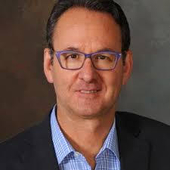
Henry Claypool, National Policy Expert
Henry Claypool is the former Director of the Health and Human Services Office on Disability, and a Founding Principal Deputy Administrator of the Administration of Community Living. He served as a presidentially-appointed member of the Federal Commission on Long-Term Care, advising Congress on how long-term care can be better provided and financed for the nation's older adults and people with disabilities. He was also the Executive Vice President of the American Association of People with Disabilities.