
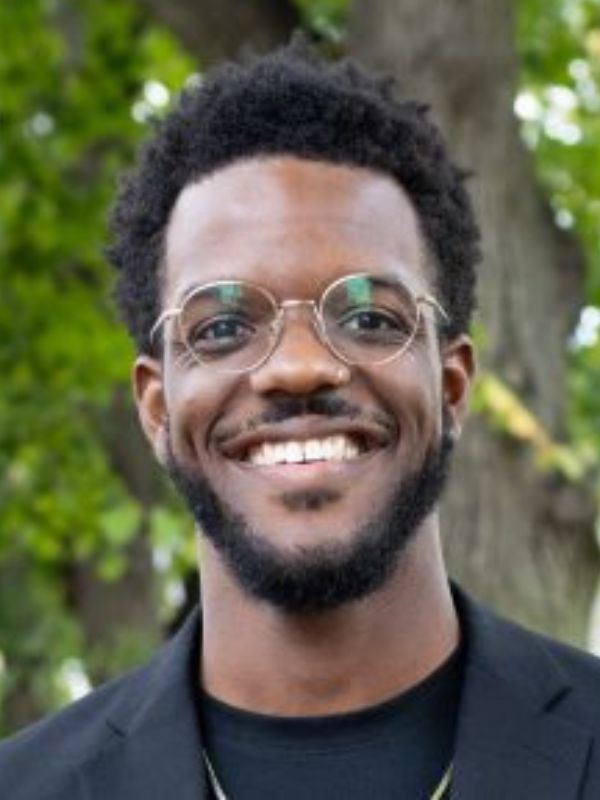
What brought you to the Heller MPP program?
A confluence of events brought me to Heller. After graduating from Brandeis with a degree in neuroscience, I was working in group homes for adults with severe psychiatric illnesses. This role exposed me to the direct service side of policy related to mental health. It was a significant experience for me and provided an interesting perspective on the interface between state-level policy and direct implementation. I was considering going back to grad school in 2020, a year marked by both the pandemic and the election. More than ever, I was struck by the importance of public policy and the potential life and death impact this sort of decisionmaking can have.
I'd always been interested in government and policy, and was already familiar with Heller. I was eager to gain a better understanding of how policy is made, implemented and evaluated, and wanted to be challenged to think about policy in different ways, through different lenses and with different frameworks, all while learning the practical, analytic skills that I could use in a professional capacity.
How did Heller prepare you for your career?
I had taken Alexandra Pineros Shields’ diversity, equity and inclusion course, and she encouraged me to apply to Mass Budget, where she was the chair of the Board of Directors. I started working there as a policy analyst a few months after graduation and I've been there ever since.
At Heller, I was given the tools to understand the profound effects that policy can have—whether it is being used to empower or disempower different groups and communities, both intentionally and unintentionally. There's a way of approaching public policy that maximizes winners and minimizes losers, given finite resources. Heller pushed me to think more about the systems, beliefs and narratives that create winners and losers, who these groups tend to be and why. At Mass Budget, we're a progressive research and advocacy organization that works on state level policy. It helps to have a North Star for the kind of policy I want to be advocating for, and an understanding of how we can refine existing policy in order to create a more equitable system. I learned those skills at Heller.
Describe the Heller community.
Some of my closest friends are from my time at Heller, which is special to me. I'm still struck by how many passionate people I came across there. Whether people were coming straight out of undergrad or coming back to school after working another career, the throughline everyone shared was a desire to gain knowledge for the sake of making a tangible impact. The people at Heller, peers and faculty alike, have deeply held beliefs about what justice should look like in the world, and they're here because they want to make a difference.
What advice do you have for current Heller MPP students?
Heller is made-up of so many people who are not only doing good work, but people who want to help you do good work and do better work out in the world. Embrace the opportunity to connect with peers and faculty—so many great academics and practitioners have come out of Heller, and I'm still leveraging those connections. Don’t be afraid to talk to a faculty member whose work piques your interest or engage with classmates who have similar passions.
What advice do you have for prospective students?
If one of the goals in your professional journey is to understand how systems and history have shaped and continue to shape public policy, I think Heller is a great choice for getting that kind of comprehensive education. It's critical to know how to interrogate what our current systems look like in order to make them work more effectively.