
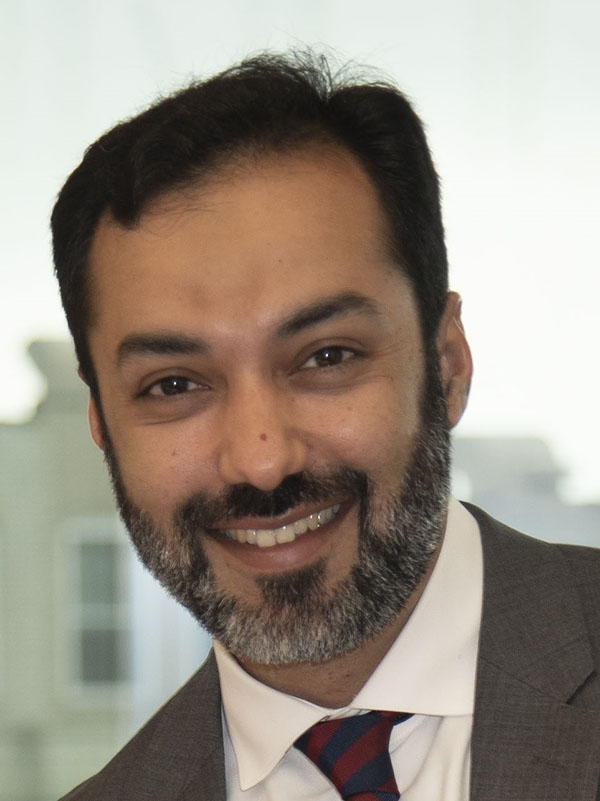
Usman Ahmad is a cardiothoracic surgeon who has been a part of the Cleveland Clinic system for over a decade. Three years ago, he moved from Cleveland Clinic, Cleveland, Ohio, to Cleveland Clinic Abu Dhabi to serve as the hospital’s Division Chair of Thoracic Surgery within the Heart, Vascular & Thoracic Institute. As part of this international work, Usman has helped to develop and grow a complex care hospital and found himself interacting with business partners, policymakers and other hospital systems: "My role in Abu Dhabi is more dynamic and requires working with business partners and regional government entities, and demands operational flexibility in a rapidly evolving healthcare landscape. That's what prompted me to go for further training in areas outside of medicine.”
Usman first became familiar with the Executive MBA for Physicians program at Heller after receiving a scholarship to attend the program’s weeklong introductory course in 2018 through the Society of Thoracic Surgeons. The program's focus on physicians was a major factor in his decision to pursue a secondary degree in business. “The language is very practical and understandable, and the examples and case studies are much more relatable than a typical MBA program would provide,” says Usman. “I also feel at home sitting amongst my peers in the medical field.”
He was also drawn to the flexibility of having in-person classes as well as online, active participation classes. “It's not just recorded videos. The lectures involve timely discussions, group exercises and opportunities to engage with the material, the professors and your peers,” he says, noting that the faculty are very in-tune with teaching physicians and understand the pressures physicians face, both clinical and personal: “They're flexible enough to accommodate us, but there's no compromise on delivering the core curriculum. You have to take an active role in your education, which increases the value of the course and ensures that you take something away from it.”
Before starting the remote work, Usman participated in an initial on-site session at the Heller campus. He recalls that the course, while intense, was structured in a way that prepared students for the rest of the semester: “As part of the hybrid model, I found it extremely helpful to be introduced to the core topics within the first ten days. It sets the tone and helps segue to the online portion.”
The various aspects of the program—leadership, operations, marketing and business administration skills—are strategically organized so that each semester’s content flows in the same direction. All the courses are relevant to each other, making the work easier and more impactful, says Usman, who is already putting lessons from the financial accounting course into practice: “I’m a lot more involved with the business side of my department, and I'm able to make more informed decisions and be more involved in the day-to-day business aspects.”
Although it takes time and dedication to balance life as both a full-time student and a full-time physician, Usman believes that it’s well worth the effort: “It is a commitment and has to be taken seriously, and that's what really leads to the best results in terms of getting the most out of the program.” Looking ahead to completing the 16-month program in May 2026, he is optimistic that his EMBA skills will have a long-term impact and has already shared his positive experience with peers: “I think the whole exercise is extremely rewarding for physicians at any point in their career.”