
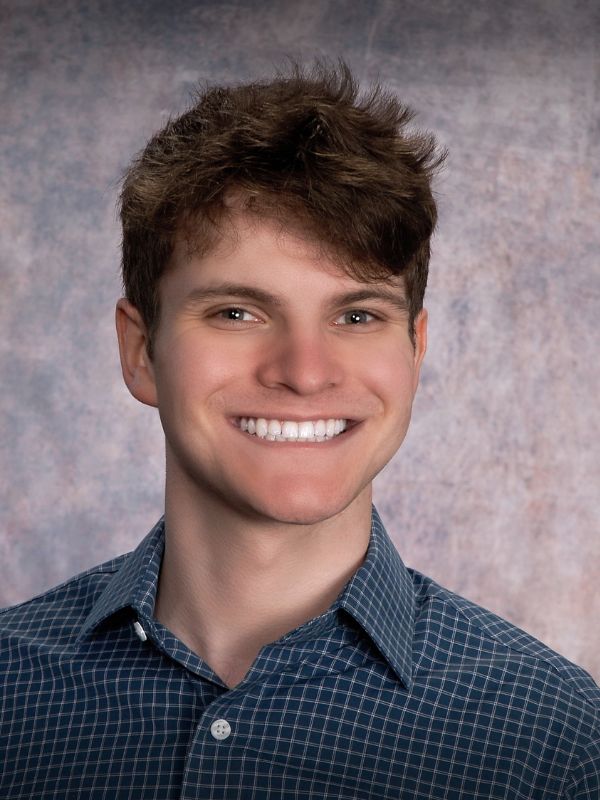
What brought you to the Heller MPP program?
As a junior at Brandeis University, I participated in the Lurie Institute for Disability Policy’s Student Fellowship, an incredible opportunity that ultimately sparked my interest in Heller’s MPP program. As someone with cerebral palsy who’s passionate about helping disabled people live, work and participate in their communities, Heller’s MPP program in particular was attractive to me because it would best allow me to continue to be involved with Lurie’s Community Living Policy Center (CLPC), whose work aligns with my passion. The MPP program was an easy choice: not only would it allow me to engage in on-the-ground policy advocacy work as soon as possible, but, in offering generous merit aid to Brandeis alumni, would also allow me to graduate with a world-class policy education at a fraction of the cost of other top schools’ programs.
Describe your fellowship with the Lurie Institute.
It was amazing. During my fellowship, I researched promising policies and practices at the state and local level that help disabled people, especially those who are institutionalized or at risk of institutionalization, live and participate in their communities of choice. As someone interested in the built environment and how structural inaccessibility impacts those with disabilities, it’s been an honor to do this work as a Lurie Fellow—and a privilege to work with some of the foremost experts in the field of community living in doing so. I really appreciated the autonomy I was given over the research I supported during my fellowship—I felt like my mentors treated me as an equal. And I am so fortunate to have the opportunity to continue this work as a Graduate Research Assistant with the CLPC and Lurie’s Quantitative Data Team.
What experiences at Heller have helped you to understand disability policy in a deeper way?
This past fall semester, I took Historical and Contemporary Developments in Social Welfare with Professor Mike Doonan, where he introduced Theda Skocpol’s Polity-Centered Approach as a framework for understanding why policies take the shape they do and why they pass. The Polity-Centered Approach considers how the contours of the legislative process are shaped by policy feedback and by congruence among the goals, capacities, leverage and levels of institutional access of different political actors. In Professor Doonan’s course, I had the opportunity to apply this framework to explain the passage of the Americans with Disabilities Act in 1990 and the 2008 passage of the ADA Amendments Act, which deepened my appreciation of how macro-level social and political conditions underpin contemporary American disability policy.
How would you describe the Heller community?
I love how diverse and global the Heller community is! In class, more often than not, I'm sitting next to someone who hails from the other side of the world. I’ve learned so much from my international peers’ diverse perspectives. I find these global perspectives incredibly important as someone who focuses on American disability policy because I believe policy development should draw inspiration from successful policies around the world. Global perspectives also remind us that the way we ‘do’ disability policy here in the U.S. is not necessarily the way that it ought to be done. And overall, the friendliness and warmth of the Heller community and the diversity of thought within it have been really wonderful.
What is your advice for prospective students?
If you’re interested in policy and thinking about applying to Heller, go for it! It's good to keep your options open, especially in today's job market. I feel super prepared to tackle whatever comes next because of what I'm learning at Heller. The depth of knowledge and the toolkit that you get here is incredibly valuable and versatile, whether you want to work in the public, non-profit or for-profit sector.