
Heller MS GHPM students are simply amazing. We believe that our program attracts people who are uniquely driven to improving health systems for local communities. Our students come to Heller with an already-impressive array of skills and experiences, from doctors and nurses, to returned Peace Corps volunteers and public health workers.
Student Profiles
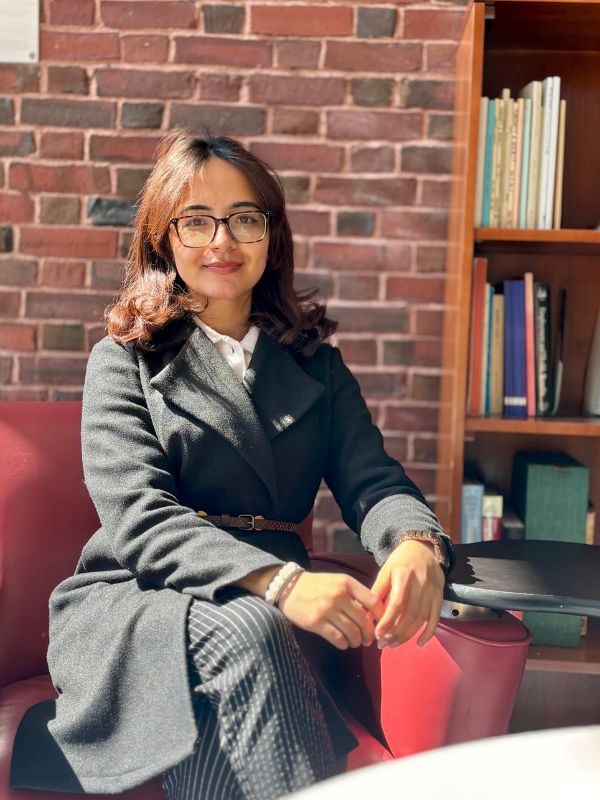
Anjila Pandey, MS GHPM'26
"Heller is a close-knit, diverse community where every student’s perspective is seen and heard. Students come from all over the world and bring different lived experiences, mindsets and skills through their work in global health, and they’re eager to share those experiences in classes with their peers and professors. After being at Heller, I have an enhanced perspective as a global citizen that I can share with other people and utilize in my own country’s system after graduation."
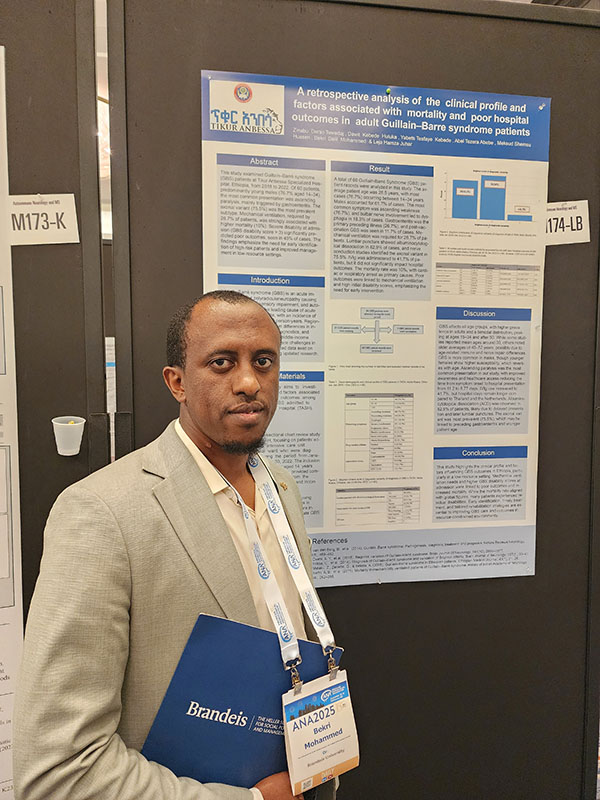
Bekri Delil Mohammed, MS GHPM'26
Mohammed recently participated in and presented a poster at the 150th Annual Meeting of the American Neurological Association (ANA2025).
“I was able to attend this important event thanks to funding from Heller, which helped cover all related expenses....My research deeply connects to my academic focus on health equity and policy reform. Studying global health systems and evidence-based policy interventions at Heller is helping me translate [research] findings into policy strategies that can strengthen health systems, improve access to clinical care, and reduce global disparities in health outcomes.”
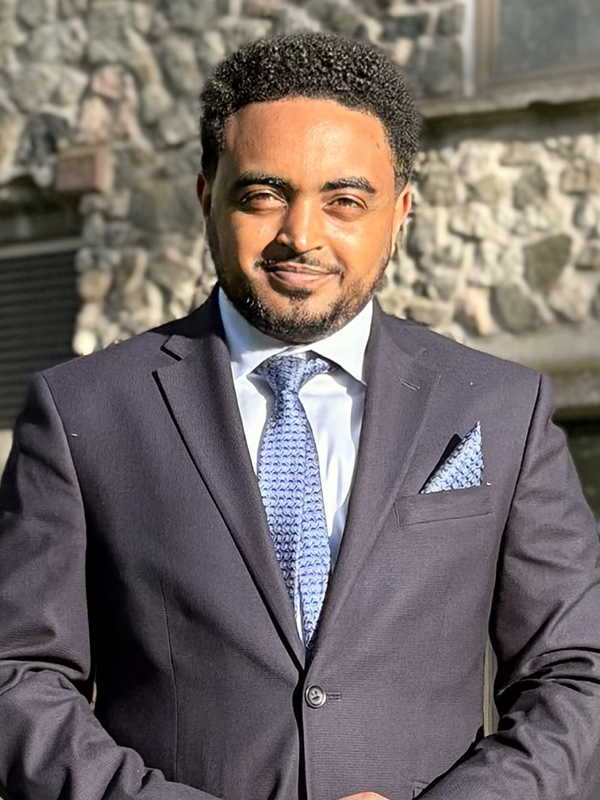
Biniyam Abebe, MS GHPM'25
“When you come from a low-income country and witness the devastating consequences of unfairness in health care systems, you understand the impact policymakers have. I want to create more equitable, efficient, and sustainable health care access for underserved and marginalized people. In order to make those changes, you have to start with policy.”
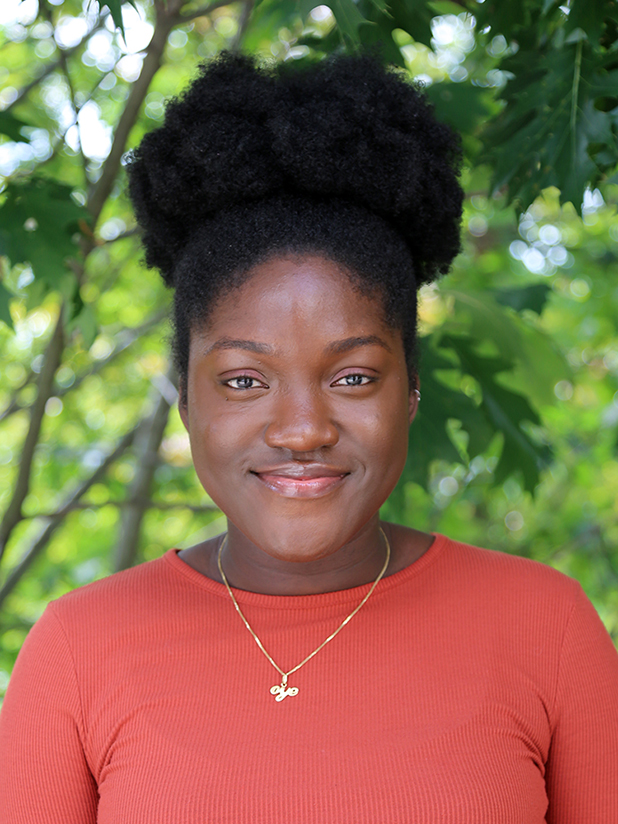
Maamie Oye Appiah, MA SID/MS GHPM’24
Appiah has for years researched how environmental issues impact public health. At Heller, she aims to build on those skills to help marginalized populations around the world. When researching graduate programs, she looked for a program that would allow her to focus on both environmental issues and public health.
“When I looked at Heller, I noticed that they were very focused on recruiting people from different countries for international development, global health, and coexistence and all these things that are key to development,” she says. “This is important because they teach the people who should be working to make changes in their communities.”
“When I looked at Heller, I noticed that they were very focused on recruiting people from different countries for international development, global health, and coexistence and all these things that are key to development,” she says. “This is important because they teach the people who should be working to make changes in their communities.”
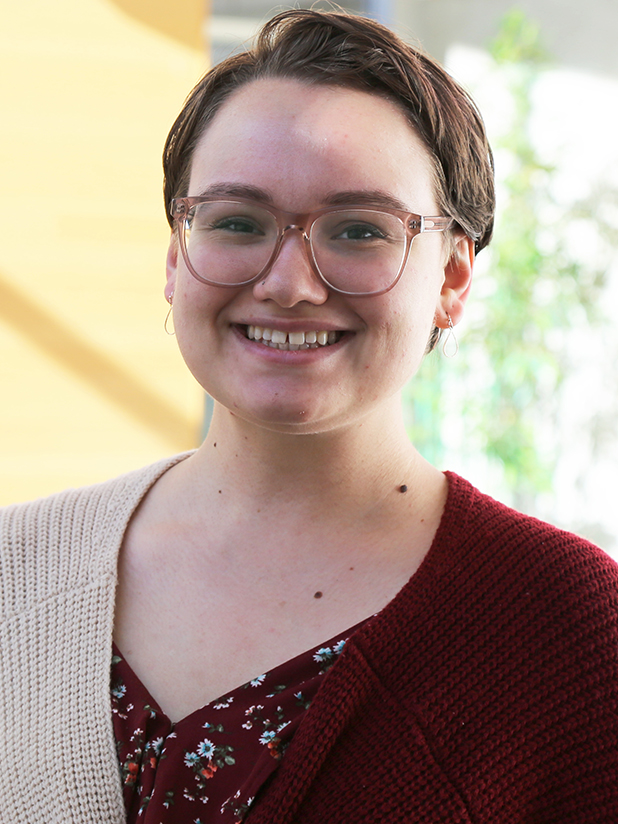
Sam Lee, MS GHPM/MA COEX’23
Returned Peace Corps Volunteer [Coverdell Fellow]
At first Lee considered traditional Master's of Public Health (MPH) programs, but she was drawn to the expansive array of skills she saw in the Heller curriculum. “International relations, responsible negotiation, responsible mediation – those aren’t at the forefront of most MPH programs,” says Lee. “Heller allowed me to expand beyond traditional MPH skills and to find the interdisciplinary mix that I wanted.”
“I want to bring the paradigm of a community health worker to policy. I also really loved the idea of the dual COEX and GHPM degrees. In today’s world, it’s easy to see how disease and conflict feed off of each other. A pandemic can influence geopolitics and catalyze conflict, and the presence of conflict can feed disease.”